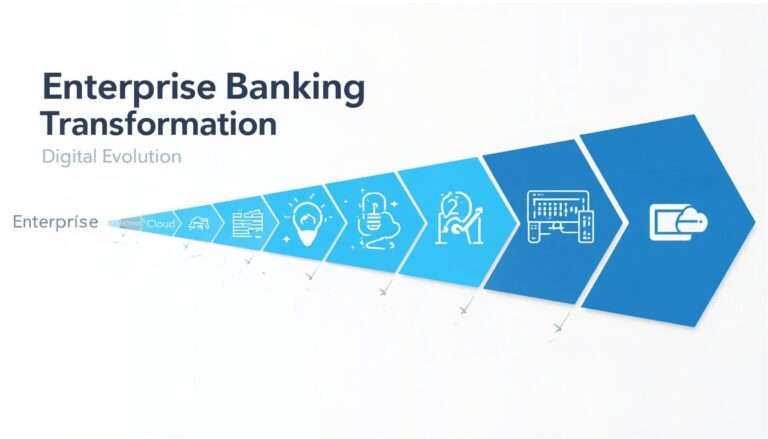
Digital Banking Innovation Frameworks for Modern Financial Institutions
The Fintech Wizard Intelligence Strategic Briefing presents a focused operational playbook for institutional leaders who must scale digital banking across jurisdictions, integrate real-time payment rails, and maintain regulatory fidelity amid 2026 macro pressures.
This briefing assumes constrained IT budgets, heightened regulatory scrutiny on data residency and transaction surveillance, and accelerating expectations for instant settlement and embedded finance. The evidence suggests that banks that pair payment orchestration with a modular compliance backbone will compress time-to-market for new products and preserve margin through automation. Read this as a decision-grade briefing, not marketing content.
The guidance that follows blends architectural prescription, an original operational model, and specific commercial levers. Expect explicit metrics for latency, throughput, cost-to-serve, and compliance coverage. Strategic decisions require trade-offs between sovereign data controls, third-party orchestration, and the unit economics of B2B SaaS delivery.
Strategic Frameworks for Digital Banking Scale
Banks must treat digital scale as a coordinated product of modular infrastructure, API-first distribution, and commercial redesign that aligns margin with usage.
Platform Partitioning and Governance
Platform partitioning requires explicit separation of customer-facing APIs, core ledger, and compliance functions so each can scale independently and under different SLAs. Operational reality requires independent deployment lifecycles: product teams must push API changes weekly, while core ledger updates remain quarterly. This reduces release risk and preserves regulatory attestability. The governance layer must enforce change windows, automated rollback, and cross-region policy templates that map to local data residency requirements.
Commercial and Operational Metrics
Measure success with unit economics and operational KPIs: cost-to-serve per transaction, average latency (ms), clearance-to-settlement delta (seconds), KYC throughput per FTE, and compliance alert false positive rate. Structure pricing to convert fixed infrastructure cost into variable revenue through per-transaction fees, subscription tiers for orchestration services, and revenue share for embedded banking flows. The commercial model must reflect the median enterprise expectation of 3 to 5x adoption elasticity for API-first products in the first 24 months.
Strategic Takeaways: Target a sub-100ms API latency, 10,000 TPS burst capacity, and reduce manual compliance interventions by 60% within 18 months.
Operational Architecture for Real-Time Payments
Real-time payments require a resilient, observable topology that isolates settlement risk, enforces fund lifecycles, and provides auditable provenance at sub-second granularity.
Settlement and Liquidity Management
Operational reality requires a dual-layer liquidity model: local intraday liquidity pools plus a global virtual wallet to net positions across corridors. The architecture must support pre-funding, credit lines, and automated intraday rebalancing using algorithmic liquidity routers. Embed predictive models that use historical flow patterns and day-of-week seasonality to reduce idle reserve balances, lowering funding cost by an estimated 30 to 50 basis points for institutions with cross-border throughput above $50 million monthly.
Event-Driven Clearing and Observable Flows
Implement event-driven clearing using idempotent message buses, durable event logs, and end-to-end tracing tied to ISO 20022 message envelopes. Operational teams must instrument the path from API call to final settlement with correlation IDs and state machines for each payment lifecycle state. This enables rapid RCA when settlement fails and supports automated compensating actions such as retry logic, staged reversals, and conditional settlement holdouts.
Strategic Takeaways: Design for 99.995% payment success within 3 seconds, and a recovery RTO under 5 minutes for payment orchestration components.
Regulatory Technology and Compliance Matrix
Regulatory compliance demands composable, policy-driven controls that operate at transaction speed and document an auditable decision trail for supervisors.
Policy Engine and Localized Rule Sets
Deploy a centralized policy engine that exposes rules as code, versioned, and scoped per jurisdiction. Operational reality requires the policy engine to evaluate rules synchronously for high-risk flows and asynchronously for low-risk patterns. Map per-country AML thresholds, sanctions lists, data retention windows, and reporting cadence into the rule repository. This allows rapid reconfiguration when regulators update thresholds, which we now observe quarterly in key markets due to elevated geopolitical risk.
Compliance Observability and Automated Remediation
Combine streaming analytics with deterministic KYT workflows to lower alert fatigue and speed investigations. The compliance stack must include entity resolution, behavioral baselining, and prioritized alert scoring with contextual data snapshots. Automated remediation should handle 40 to 60 percent of low-to-medium risk alerts, routing only escalations to analysts. This conversion yields a measurable drop in time-to-resolution and reduces operational cost per alert.
Strategic Takeaways: Aim to automate 50% of AML alerts and retain full audit trails for 7+ years, meeting cross-border supervisory expectations.
Payment Orchestration and Risk Automation
A robust orchestration layer reduces connector sprawl, centralizes retry logic, and rationalizes routing decisions, while a parallel risk automation plane enforces exposure limits and real-time credit controls.
Convergent Banking Orchestration Model (CBOM)
The Convergent Banking Orchestration Model, CBOM, centralizes connectors, routing rules, and resiliency policies into a single control plane that exposes intent-driven APIs for products. CBOM separates connectors (payment rails) from routing policy, enabling rapid onboarding of new rails without disrupting product logic. It prescribes standardized connector contracts, circuit breakers, and a policy compiler that transforms high-level intent into low-level execution steps. This reduces integration time by 60% and lowers maintenance overhead.
Risk Automation and Credit Controls
Pair CBOM with an automated risk plane that enforces creditworthiness, dynamic caps, and provenance-based denials in real time. The risk plane must evaluate exposures per corporate customer across products, apply collateral rules, and adjust routing to preserve liquidity. Integrate limit checks into the orchestration critical path to prevent over-commitment and ensure that settlement obligations remain within pre-funded boundaries.
Strategic Takeaways: CBOM target: reduce new rail integration from 12 weeks to 5 weeks and lower operational exceptions by 70%.
B2B SaaS Commercial Models for Banks
Modern banks must adopt hybrid commercial models that combine subscription pricing for platform capabilities with per-transaction and success-fee components tied to client outcomes.
Platform Economics and TCO
Operational buyers calculate total cost of ownership with three line-items: platform fees, per-transaction processing cost, and compliance overhead. The correct pricing aligns vendor incentives with bank outcomes: lower fixed fees paired with usage-based increments when volumes scale. Banks that shift 20 to 40 percent of their transaction processing to third-party orchestration platforms report 15 to 25 percent reduction in incremental TCO over three years, assuming measured vendor SLAs and shared incident response playbooks.
Contractual Controls and SLAs
Contract design must embed legal mechanisms for data portability, service credits tied to measurable KPIs, termination assistance, and transparent subprocessor chains. Operational reality means negotiating granular SLAs for availability, recovery time, observability instrumentation, and audit support. Include clauses for regulatory discovery windows and clear ownership for suspicious activity reporting to satisfy compliance officers and external auditors.
Strategic Takeaways: Target vendor arrangements that convert capital expenditure into variable op-ex at a 10 to 18 percent effective yield improvement over baseline internal ops.
Data Infrastructure and AI-Enabled Decisioning
Data must serve both operational control and commercial optimization, providing single-source-of-truth master records and predictive signals for routing, fraud, and liquidity decisions.
Canonical Data Models and Lineage
Adopt a canonical data model for customers, accounts, transactions, and instruments to eliminate reconciliation drag. Operational reality requires persistent lineage metadata that ties computed decisions back to raw inputs for auditability. Implement time-versioned snapshots for regulatory reporting and dispute resolution. This reduces reconciliation costs and shortens audit cycles by providing deterministic state reconstruction for any point in time.
Predictive Decisioning and Explainability
Deploy explainable machine learning models focused on routing efficiency, fraud probability, and liquidity forecasting. Models must produce human-readable decision explanations and probability bands to comply with supervisory expectations on model governance. Operational teams should integrate model monitors that detect data drift and trigger retraining pipelines, keeping model performance within contractual and regulatory bounds.
Strategic Takeaways: Maintain model AUC > 0.85 for fraud classifiers, and limit false positive impact on revenue to under 0.5 percent.
Conclusion: Digital Banking Innovation Frameworks for Modern Financial Institutions
The Fintech Wizard Intelligence Strategic Briefing concludes that institutional banks must marry modular infrastructure with policy-as-code, a payment orchestration control plane, and data-centric decisioning to meet 2026 operational realities.
The commercial case for transformation rests on tangible improvements: lower cost-to-serve, faster product time-to-market, and demonstrable compliance automation. Expect adoption patterns to favor hybrid models where banks retain critical ledgers on-premises or in sovereign clouds, while outsourcing orchestration, analytics, and compliance tooling to specialized B2B SaaS providers under strict contractual controls.
Forecast: Over the next 12 months, regulators will increase demands for transaction provenance and model explainability, pushing banks to standardize ISO 20022 metadata and to extend retention and lineage capabilities. Market demand will concentrate on platforms that deliver sub-100ms API responses, 99.995% uptime, and out-of-the-box KYT that automates at least half of low-risk alerts. Vendors that demonstrate composable policy engines and clear data residency controls will win enterprise procurement cycles.
FAQ
How should a bank measure ROI when migrating payment flows to an orchestration platform?
Return on investment requires three paired measurements: incremental revenue enabled, operating cost delta, and risk-cost reduction. Measure revenue by new products launched and incremental transaction fees captured; operating cost by reduced FTE hours, infrastructure charges, and integration maintenance; risk-cost by lower provisioning for manual remediation and fewer settlement exceptions. Model ROI over a 36-month horizon with sensitivity bands for adoption uptake and rail availability. Use a quarterly cadence for reforecasting and include regulatory compliance savings as a line item tied to automated alert reductions.
What is the operational impact of ISO 20022 adoption on cross-border settlement architecture?
ISO 20022 increases required message richness and enforces structured remittance and entity identifiers, which raises parsing and validation overhead but reduces downstream reconciliation effort. Operational teams must upgrade schemas, extend canonical models, and adapt event logs to carry enriched metadata. The immediate impact is higher message processing latency if not optimized, so architects must invest in schema-aware pipelines and hardware acceleration for validation. The payoff includes fewer reconciliation disputes and faster automated compliance checks, improving straight-through processing rates.
How can a bank structure automated AML processes without increasing false negatives?
Design AML automation with layered checks: deterministic rules for statutory sanctions and probabilistic models for behavior anomalies. Use ensemble methods where a rule-based filter catches definite violations and ML models score ambiguous patterns. Maintain a low threshold for human review only where combined risk exceeds calibrated bands. Implement continuous monitoring of model performance against labeled outcomes and adjust thresholds to ensure recall remains above mandated regulatory minimums, while using precision improvements to lower false positive workloads.
What contractual and technical controls protect data residency and supervisory access while using third-party orchestration?
Contractually require data residency clauses, subprocessors disclosure, and audit rights. Technically implement data segregation using tenant-aware encryption, sovereign cloud deployments, and region-bound backups. Provide supervisors with queryable, time-bound exports and implement read-only audit views that map transactions to policy decisions. Include termination clauses that ensure full data return in machine-readable formats, and instrument chain-of-custody logs to demonstrate access and modifications during regulatory inquiries.
How should a bank price embedded banking APIs for enterprise partners to align incentives?
Price embedded APIs with a hybrid model: low base subscription that covers platform access and support, tiered per-transaction fees that decline with volume, and outcome-based fees tied to activation or revenue milestones. Include rate-limits, SLAs, and overage pricing to prevent abuse. Structure revenue share for higher-margin use cases like lending facilitation. Ensure pricing models are transparent and accompanied by usage dashboards so enterprise partners can optimize behavior and so the bank can forecast cash flows for capital planning.
Tags: digital-banking, payment-orchestration, real-time-payments, regtech, fintech-saas, data-governance, banking-infrastructure